Online custom suits have opened access to tailoring that was once reserved for those near Savile Row or Hong Kong. You can order from your living room and receive a suit made for your measurements.
But here's what most companies don't tell you: measurements alone don't guarantee fit.
Your body is three-dimensional. A tape measure captures numbers, not how fabric drapes on your shoulders, how your posture affects the chest, or how you actually move.
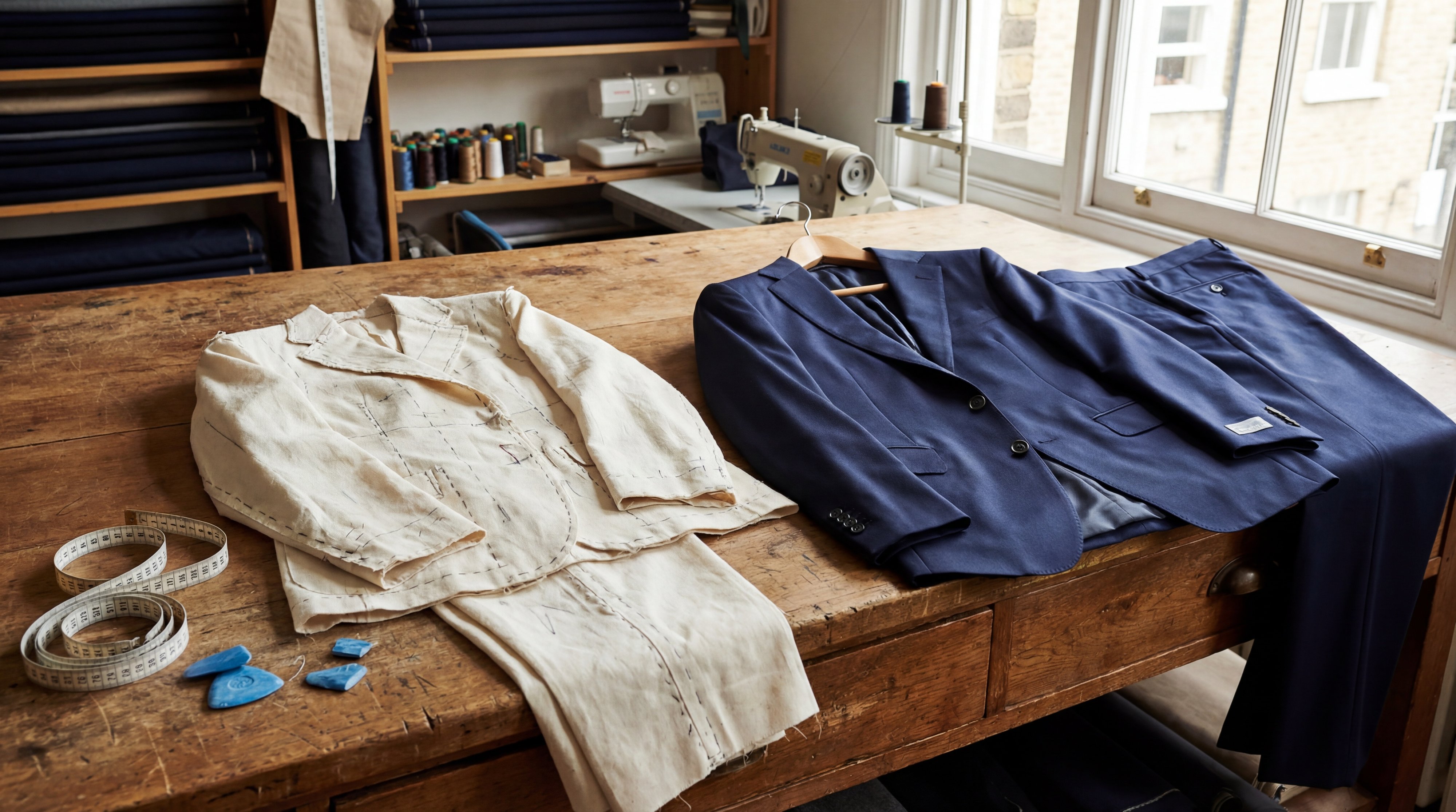
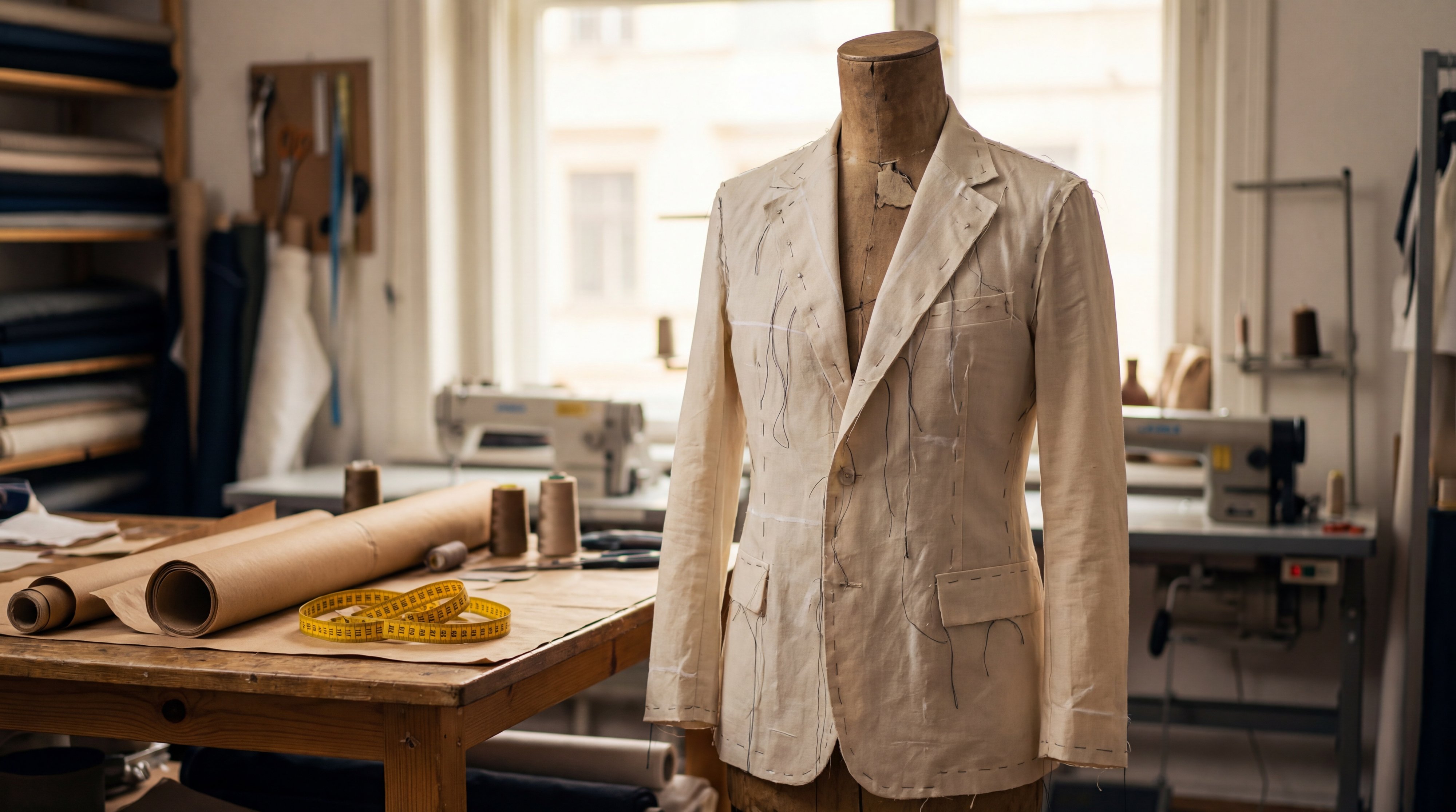
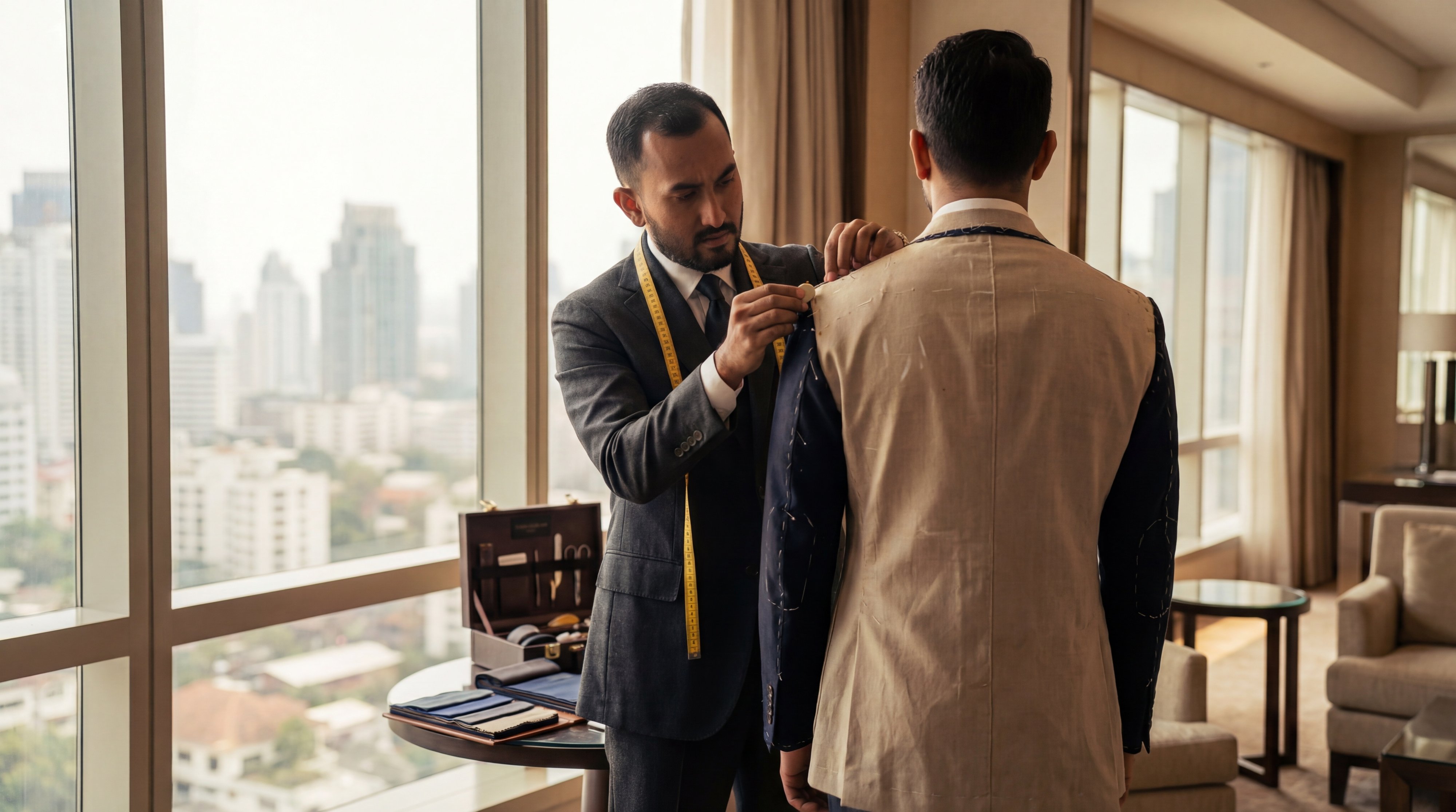
That's why traditional bespoke tailors never cut final fabric from measurements alone. They use a test garment first.
This guide explains the gap between measurements and fit—and how to bridge it.
Understanding the Fit Gap
Challenge 1: Self-Measurements Have Limits
Even with detailed video guides, measuring yourself is tricky. Here's why:
- Posture varies: You stand differently when being measured vs. relaxed
- Tape angle matters: A slight tilt changes every number
- Interpretation differs: "Shoulder point" means different things to different people
- Bodies are asymmetrical: One shoulder higher, one arm longer—tape measures don't always catch this
This doesn't mean self-measurement is useless. It's a good starting point. But it's not the complete picture.
Measurements describe your body in numbers. They don't predict how fabric will drape on it.
Challenge 2: Pattern Adjustments vs. Custom Patterns
Most online made-to-measure companies work from base patterns. They adjust these patterns using your measurements—lengthening here, widening there.
This works well for many body types. But if your proportions differ significantly from the base pattern assumptions, adjustments alone may not capture your shape perfectly.
Wide shoulders with narrow waist? Athletic build with developed back? Unusual height-to-chest ratio? These require more than number adjustments—they need verification.
Challenge 3: The Missing Step
Here's how most online ordering works:
- You submit measurements
- Company cuts your chosen fabric
- Suit ships to you
- You try it on
The challenge? By step 2, your fabric is already cut. If the pattern needed adjustment, that fabric is committed.
This is why many companies offer alteration credits. They know some suits will need tweaks after arrival.
For minor adjustments—sleeve length, trouser hem—this works fine. For structural issues—shoulders, chest, armholes—alterations are limited.
What Bespoke Tailors Know
Savile Row tailors charge $3,000-8,000 for a suit. A significant part of that price funds the fitting process:
- Detailed measurements (25-30 data points)
- Body analysis (posture, asymmetries, movement)
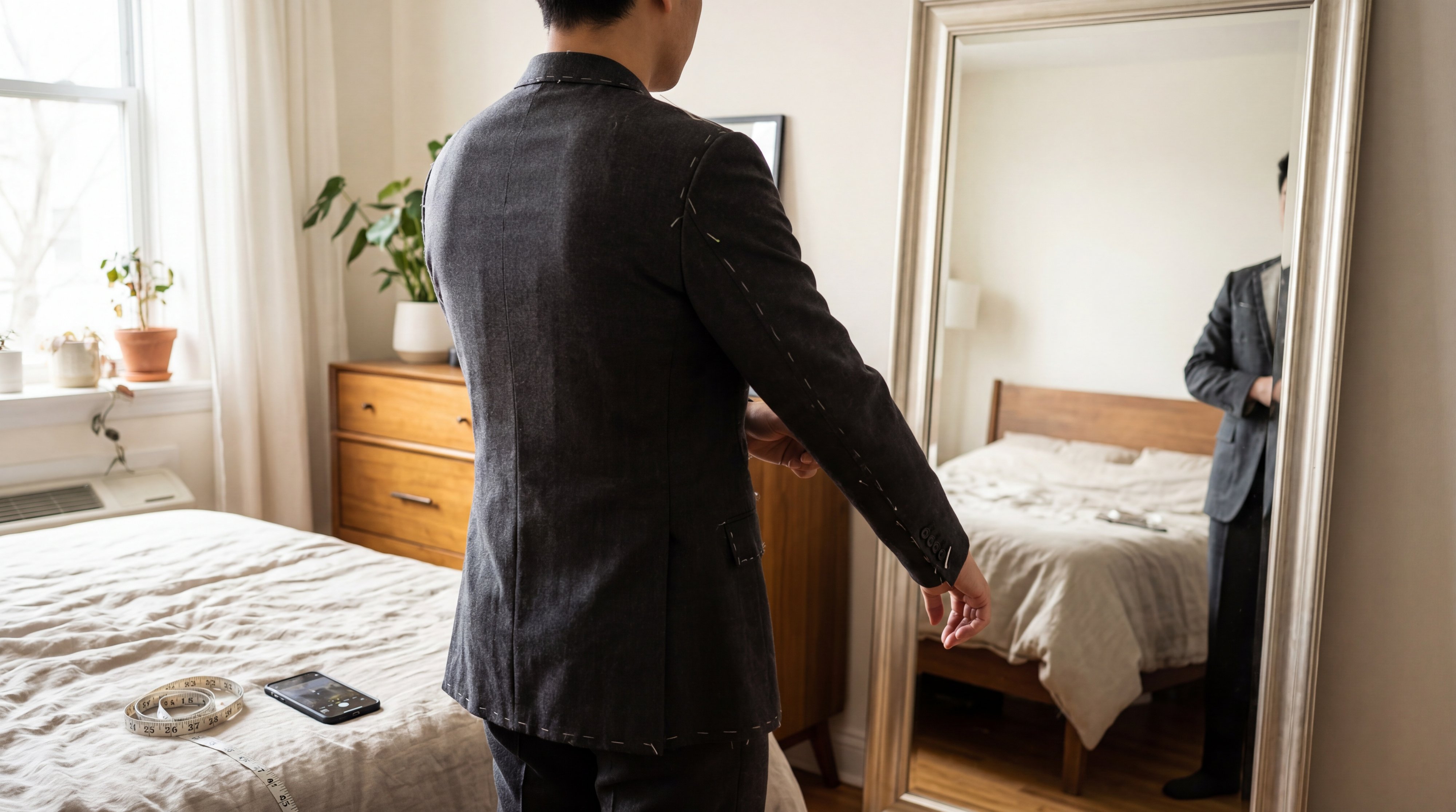
- Test garment in inexpensive fabric
- You try it on
- Pattern adjusted based on reality
- Sometimes a second test fitting
- Final fabric cut from proven pattern
That test garment—called a "toile" or "basted fitting"—is where perfect fit actually happens.
The tailor sees how fabric falls on your specific body. They catch issues that numbers miss. They adjust based on reality, not calculations.
By the time they cut final fabric, the pattern is proven.
Draft Fitting: The Bespoke Step Made Accessible
What if you could get that test garment step—without the Savile Row price?
That's what draft fitting delivers.
How It Works
- You provide measurements (DIY or via our pattern service)
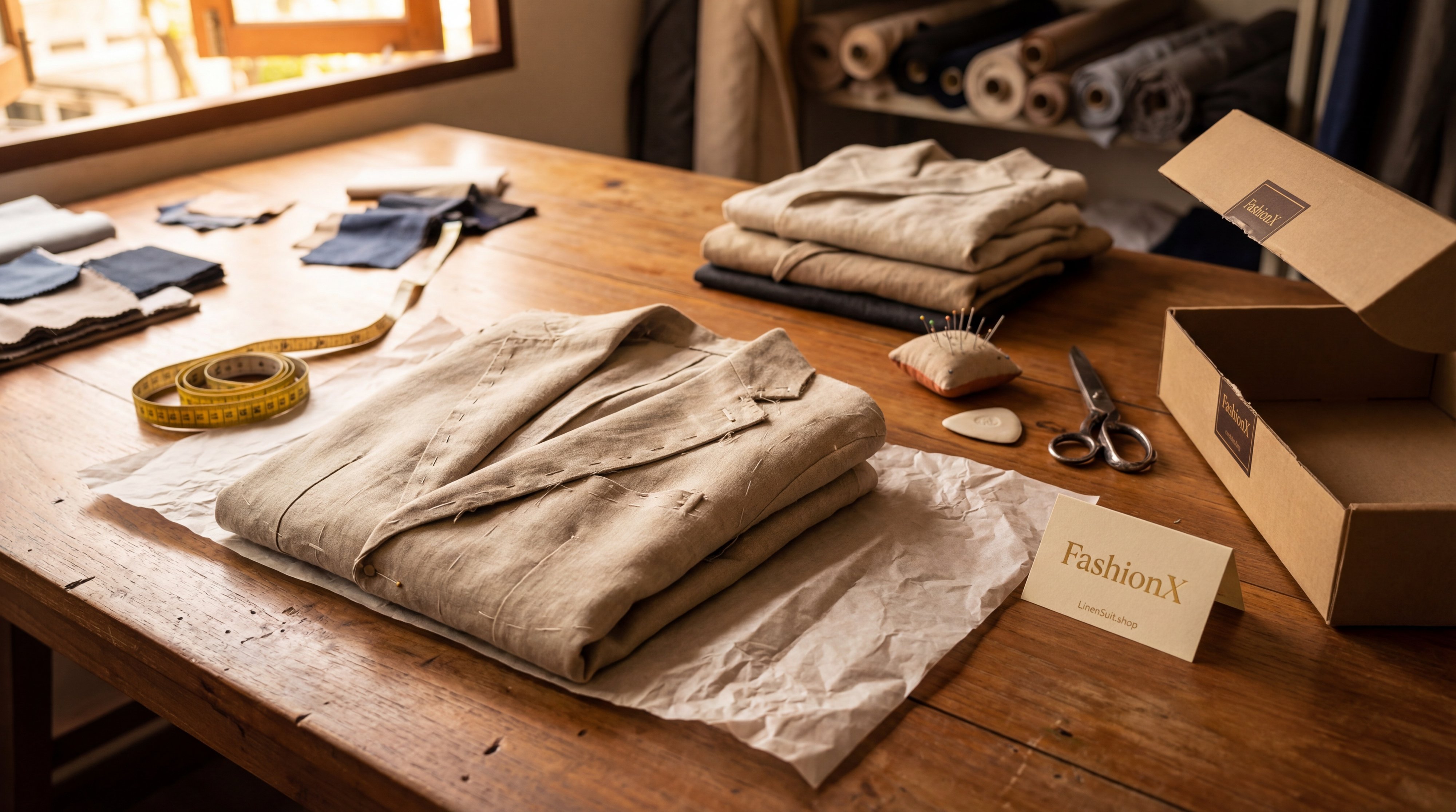
- We make a test garment in fitting fabric
- It ships to you anywhere in the world
- You try it on and send photos with feedback
- We adjust the pattern based on your real body
- Final fabric cut from verified pattern
Your body becomes the proof. Not calculations. Not averages. Your actual body in an actual garment.
What This Catches
- Shoulder fit: Too wide or narrow shows immediately
- Posture effects: How the fabric drapes on YOUR back
- Asymmetries: One shoulder higher visible in photos
- Chest room: Feel it when you move and button
- Length preferences: Try it and decide exactly where you want it
By the time we cut your final fabric, we've proven the pattern works on your body.
Draft Fitting vs. Alteration Credits
Both approaches acknowledge that measurements aren't perfect. They solve it differently:
| Approach | When Issues Found | What Can Fix |
|---|---|---|
| Alteration Credit | After final garment made | Minor adjustments (hem, sleeves, waist) |
| Draft Fitting | Before final fabric cut | Everything including structure (shoulders, chest, armholes) |
Alteration credits work for small tweaks. Draft fitting catches issues before they're built into your suit.
The Timeline Reality
Standard online MTM:
- 3-4 weeks production
- Suit arrives
- If alterations needed: 1-2 more weeks
- Total: 4-6 weeks
With draft fitting:
- 2-3 weeks for draft garment
- 1 week for feedback and adjustment
- 2-3 weeks for final production
- Total: 5-7 weeks
Draft fitting adds about a week to the process. In exchange, you get fit verification before final fabric is cut.
For a garment you'll wear for years, that week is worth it.
Who Benefits Most
Everyone benefits from fit verification. Some situations make it especially valuable:
- First-time custom buyers: No baseline, no idea what to expect
- Unique proportions: Athletic builds, asymmetries, unusual measurements
- Previous disappointments: If online ordering hasn't worked before
- Investing $500+: Too much money to leave to chance
If you've tried online suits and been disappointed, it likely wasn't your measuring skills. It was the lack of verification.
How We Do It
Draft fitting is included with every LinenSuit.shop order. Not an upgrade. Standard process.
- Choose your fabric ($590-800)
- We send the draft garment
- You try it on and give feedback
- We adjust the pattern
- Your suit is made from proven pattern
- Pattern stored for future orders
Once we have your verified pattern, reorders skip the draft phase entirely. We already know your fit.
The Bottom Line
Measurements are the starting point, not the destination.
Traditional bespoke tailors have known this for 150 years. They never cut final fabric until they've proven the pattern on your body.
Draft fitting brings that same principle to online ordering. You get verification before commitment.
The result: a suit that fits because it was tested on you—not calculated from numbers and hoped for the best.