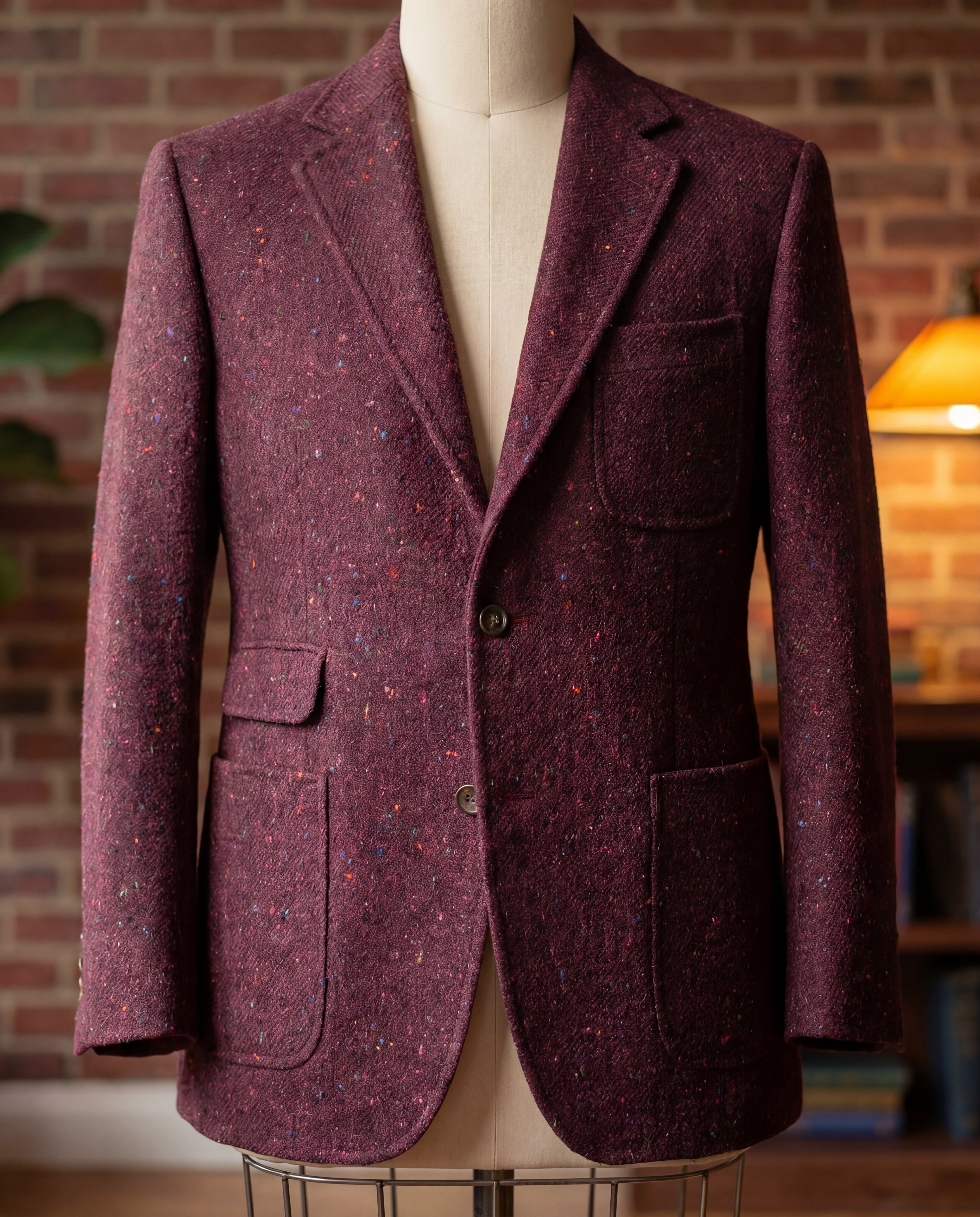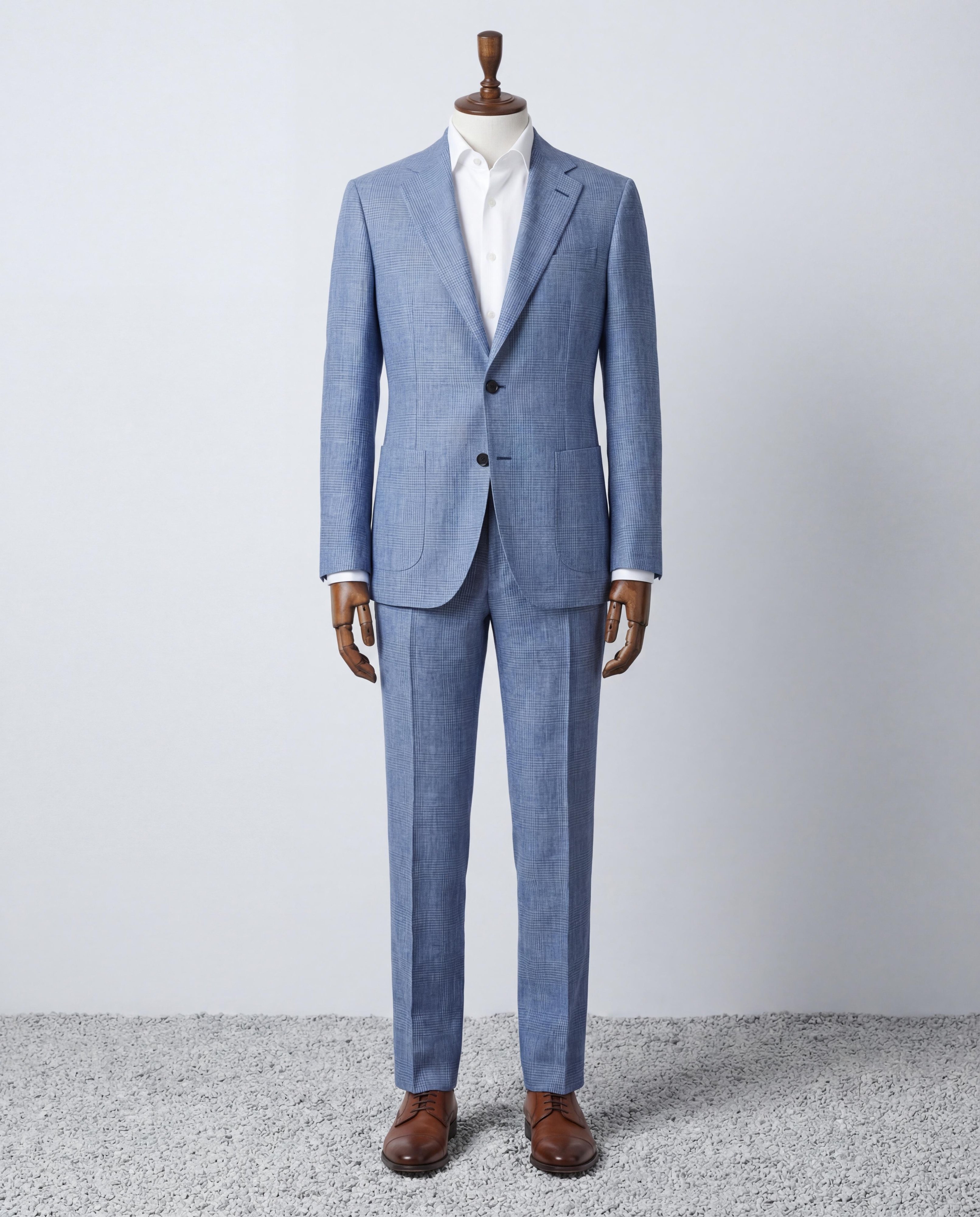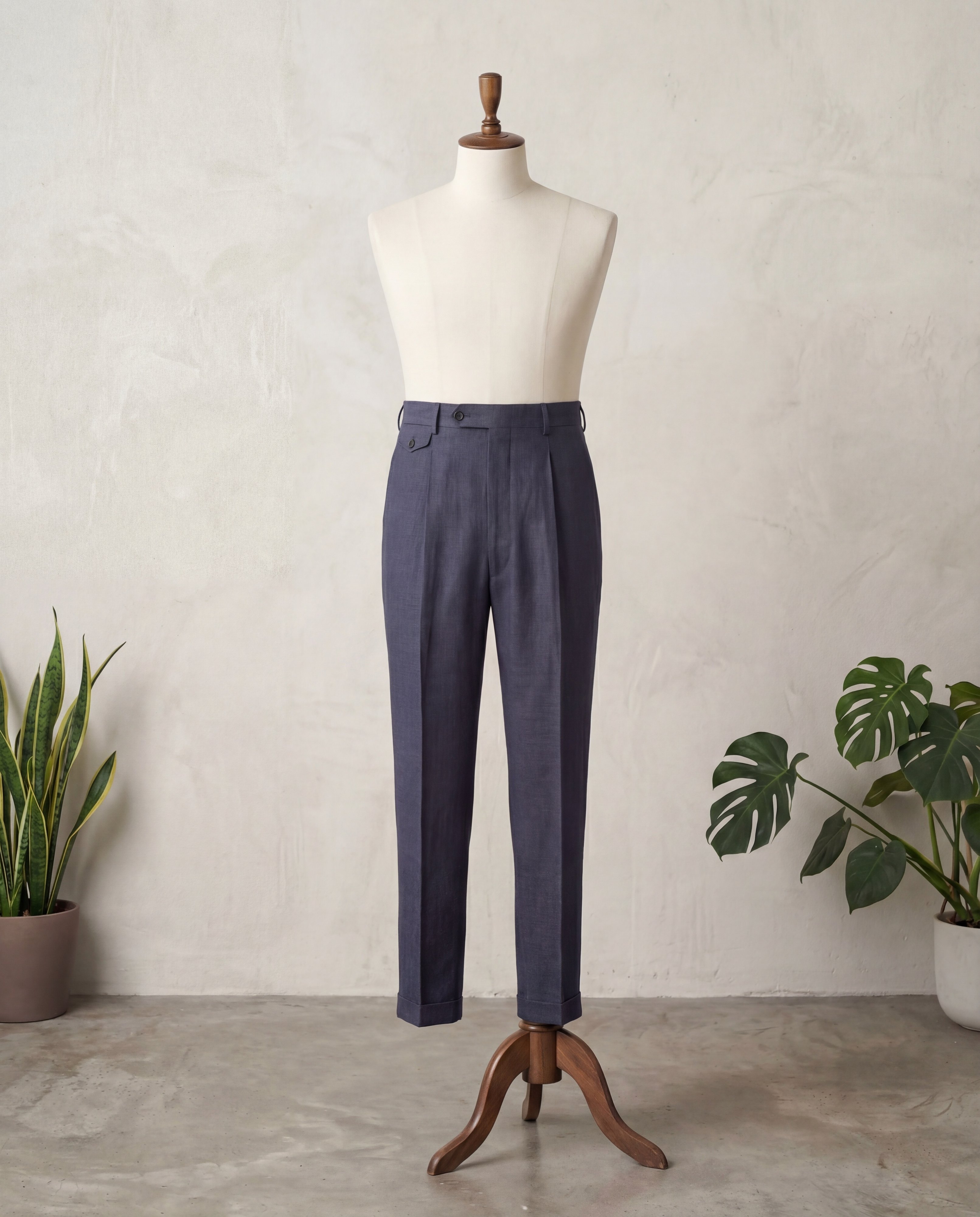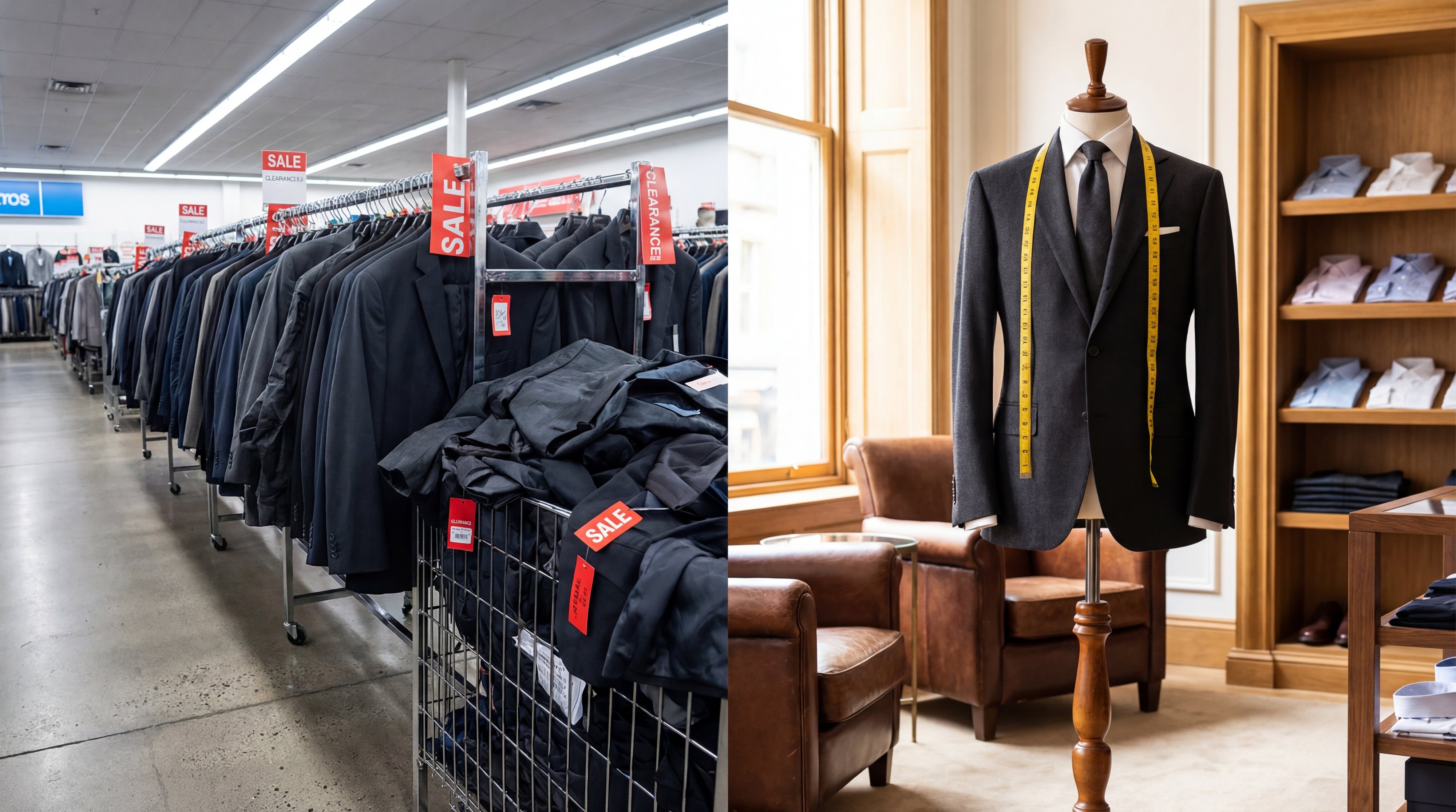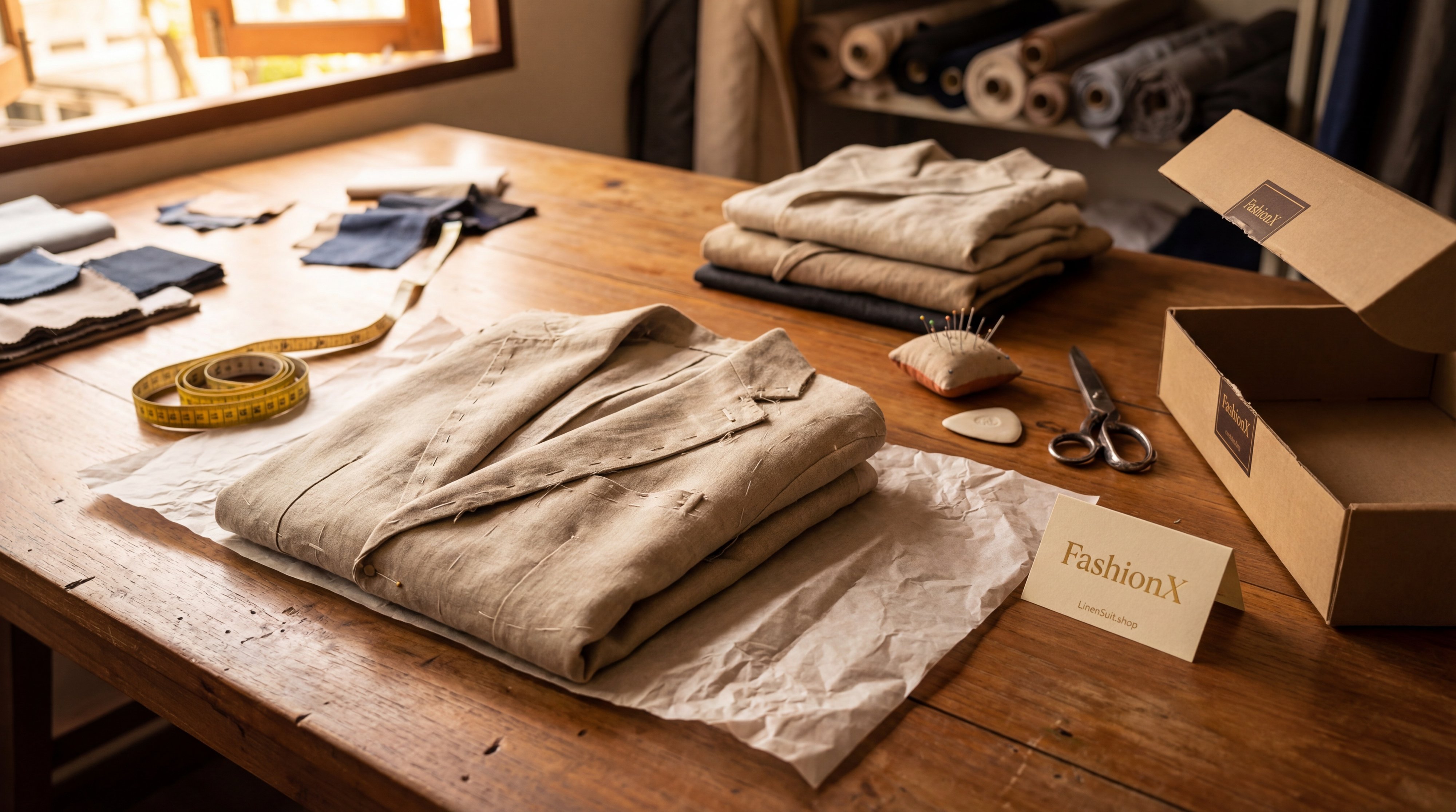
You've ordered a $800 custom suit online. Six weeks later, it arrives. The shoulders are too wide. The chest pulls. The sleeves are an inch too short.
The tailor says alterations will fix it. They won't. Shoulder width can't be altered. You're stuck with an expensive mistake.
This is exactly why muslin fitting exists.
For over a century, the world's best tailors have used test garments to catch fit problems before cutting expensive fabric. Savile Row calls it "toile fitting." American tailors say "muslin fitting." We call it draft fitting.
Different names. Same principle. Never cut the final fabric until the fit is proven.
What Is Muslin Fitting?
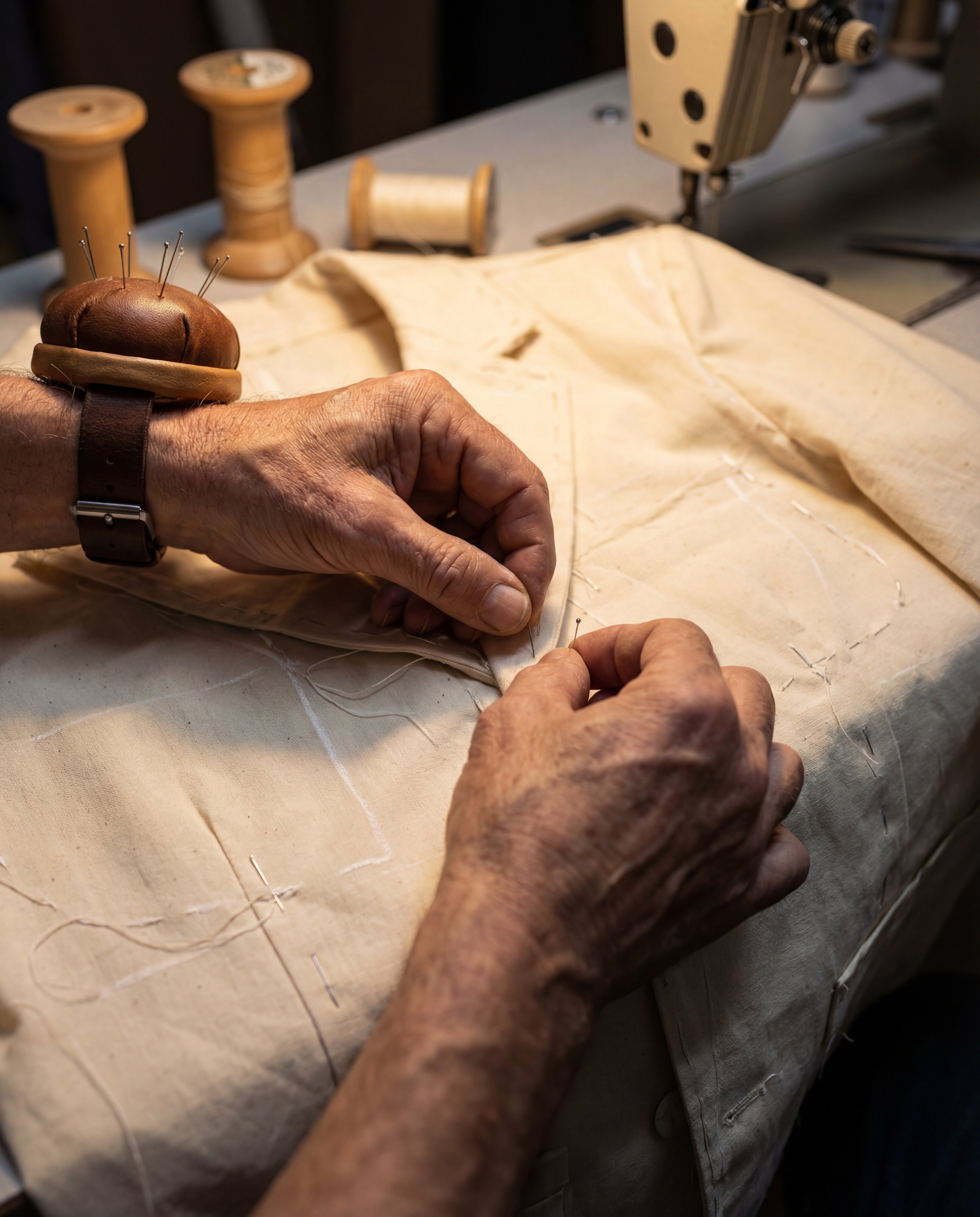
Muslin fitting is simple: a tailor creates a test garment in inexpensive fabric before making your actual suit.
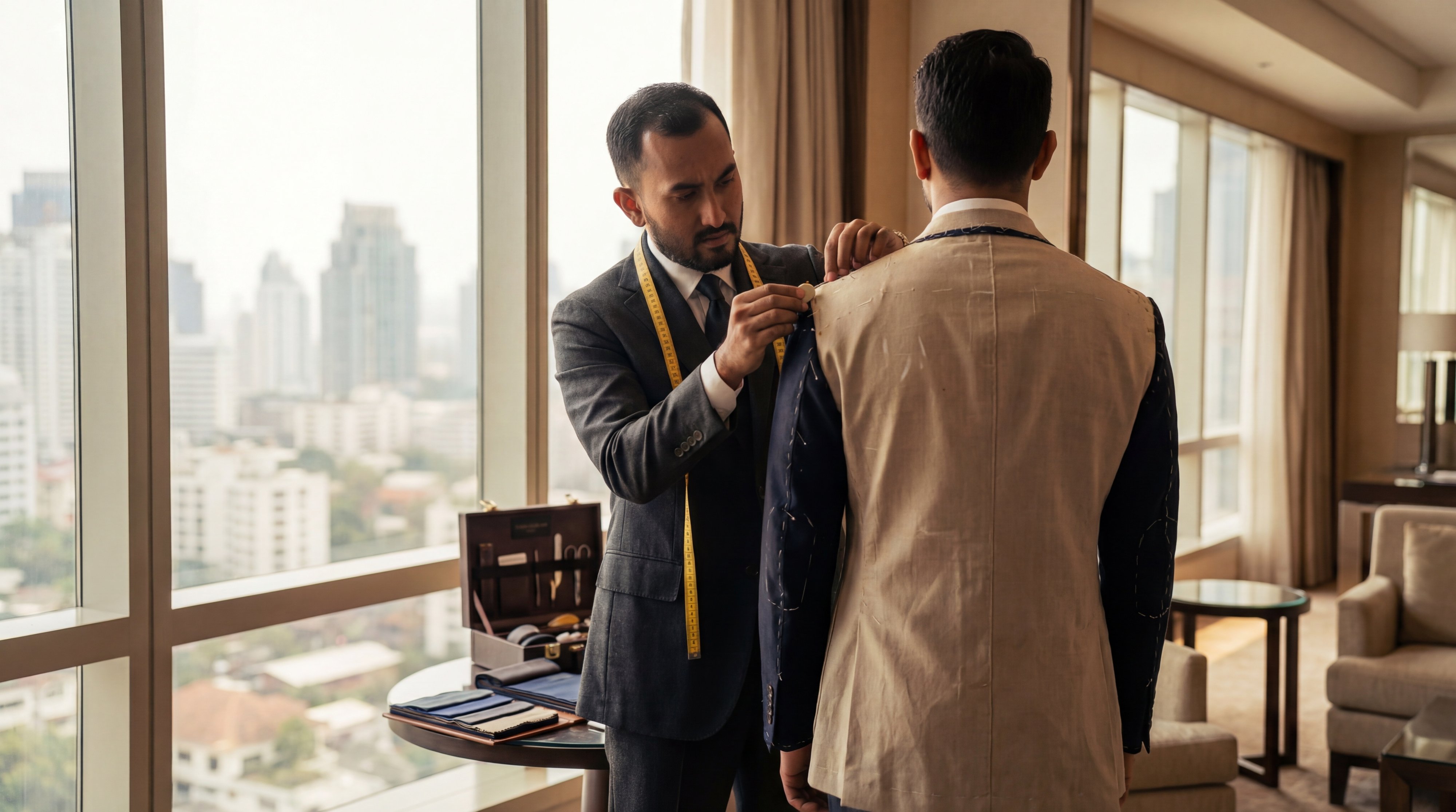
You try on this mock-up. You check the shoulders, chest, sleeves, and waist. The tailor adjusts the pattern based on what you see and feel.
Only after you approve does the tailor cut your premium fabric.
The terminology:
- Muslin – American English term (named after the cheap cotton fabric traditionally used)
- Toile – British/French term (pronounced "twahl")
- Mock-up – General term
- Draft fitting – Modern term used by online tailors like us
All mean the same thing: a test garment that protects you from expensive mistakes.
Why Do $3,000+ Tailors Use Muslin Fittings?
Savile Row tailors have used toile fittings for over 150 years. Parisian couture houses won't cut silk without one. Articles of Style ($2,495-3,695 per suit) ships test garments before touching your final fabric.
Why? Because measurements alone aren't enough.
Your body isn't symmetrical. One shoulder sits higher. One arm hangs differently. Your posture affects how fabric drapes. No tape measure captures these details.
The economics are clear:
- Without muslin: One pattern error = $600+ remake + destroyed customer trust
- With muslin: $20-30 test fabric catches all issues before production
The test garment costs almost nothing. The remake costs everything.
Muslin Fitting vs Basted Fitting: What's the Difference?
You'll hear both terms in bespoke tailoring. Here's the distinction:
Muslin/Toile Fitting:
- Made from inexpensive substitute fabric
- Used when final fabric is very expensive or irreplaceable
- Can be altered dramatically without consequences
- Pattern errors are caught risk-free
Basted Fitting:
- Made from your actual chosen fabric
- Pieces are loosely stitched (basted) together
- Easier to see final drape and color
- Less flexibility for major changes
When tailors choose muslin over basted:
- Expensive fabrics ($200+/meter)
- Rare or limited fabrics that can't be reordered
- First-time customers with unknown fit preferences
- Remote customers who can't do multiple in-person fittings
- Leather (stitching leaves permanent holes)
Most online tailors skip both to save time. That's exactly why fit problems are so common.
What a Muslin Fitting Catches (That Measurements Miss)
Here's what a test garment reveals that numbers can't:
Body Asymmetry
Real example: A customer's measurements showed 18" right shoulder, 17.5" left shoulder. Half an inch difference.
On paper, you'd average it. In real life, that creates a jacket that pulls on one side and gaps on the other.
The muslin fitting caught it. Pattern adjusted for each shoulder independently. Final jacket: flawless.
Posture Issues
Do you slouch slightly? Lean forward when standing? Have one hip higher than the other?
These affect how fabric hangs. A suit cut for a "neutral" posture will pull and bunch on your actual body. The test garment shows exactly where adjustments are needed.
Personal Preferences
"Slim fit" means different things to different people. Some want the jacket to skim the body. Others want room to move.
You can't describe this in a measurement form. But you can try on a test garment and say, "I want it slightly looser through the chest."
Sleeve Pitch
Your arms don't hang straight down at 0 degrees. They angle forward or backward based on your bone structure and posture.
If the sleeve is cut for the wrong angle, it twists on your arm. The muslin fitting shows this immediately—before it's too late to fix.
Why Most Online Tailors Skip Muslin Fittings
Speed and cost.
A muslin fitting adds 2-3 weeks to production. It requires additional labor and international shipping. It cuts into profit margins.
So most online tailors take your measurements, cut directly into final fabric, and hope for the best.
What happens when they're wrong:
- "Our alterations will fix any issues" (alterations are limited—shoulders can't be changed)
- "We'll remake it for free" (you wait another 6 weeks, they eat the cost and resent you)
- "The fit is within acceptable tolerance" (corporate speak for "it doesn't fit but we won't fix it")
The smart question to ask any online tailor: "Do you send a test garment before cutting my final fabric?"
If the answer is no, you're gambling.
How We Do Muslin Fitting (Draft Fitting Process)
We call our version "draft fitting." Same concept, modernized for online customers.
Step 1: Measurements (Week 1)
Two options:
DIY Measurements (Free)
Follow our step-by-step video guide. Take photos as you measure. We review everything and ask clarifying questions via WhatsApp.
Ultimate Precision Service ($49)
Ship us a garment that fits you well. We measure it professionally—30+ data points, not just the basics. This works especially well for customers who already own a suit or shirt that fits perfectly.
Step 2: Draft Garment Creation (Week 2-3)
We create a unique pattern based on your measurements. Then we construct a test garment in affordable fabric.
This draft garment is fully constructed—not just pinned together. You can actually wear it, move in it, sit in it.
Step 3: Draft Delivery (Week 3-4)
We ship the draft garment internationally:
- Asia: 3-5 days
- North America: 7-10 days
- Europe: 7-12 days
- Australia: 5-7 days
Full tracking provided.
Step 4: Virtual Fitting (Week 4-5)
You try on the draft at home. Check:
- Shoulders (sitting flat? too wide? too narrow?)
- Chest (can you button comfortably? too tight? too loose?)
- Back (pulling? bunching?)
- Sleeves (length correct? comfortable range of motion?)
- Collar (sitting against your neck?)
Take photos from front, back, and both sides. We schedule a video call or exchange detailed feedback via WhatsApp.
What we're looking for:
- Fit issues to fix
- Personal preferences to incorporate
- Pattern adjustments needed
Step 5: Pattern Refinement
We adjust your pattern based on fitting feedback. These changes are permanent—saved to your profile for all future orders.
For significant adjustments, we create a second draft at no extra cost. (Rare—95% of customers approve with minor or no changes.)
Step 6: Final Production (Week 5-8)
Only now do we cut your premium fabric.
Your suit is constructed with full canvas, hand-stitched details, and 8+ hours of craftsmanship. Because the pattern is proven, the final garment fits correctly the first time.
Total Timeline:
- DIY measurements: 4-6 weeks
- Ultimate Precision: 6-8 weeks
Muslin Fitting vs No Fitting: The Real Difference
Without muslin fitting:
- Tailor receives measurements
- Cuts expensive fabric immediately
- Constructs suit
- Ships to customer
- Fit problems discovered too late
- Limited alteration options
- Customer frustration, refund requests
With muslin fitting:
- Tailor receives measurements
- Creates test garment in cheap fabric
- Ships to customer
- Fit problems discovered early
- Pattern adjusted before touching final fabric
- Premium fabric cut from proven pattern
- Perfect fit, satisfied customer
The extra 2-3 weeks of testing saves 6+ weeks of remakes and frustration.
What If the Muslin Doesn't Fit?
That's the whole point.
If your test garment fits perfectly on the first try, great—you have an easy body to fit. Most people need 1-3 minor adjustments. This is normal and expected.
Common adjustments:
- Sleeves shortened or lengthened
- Chest taken in or let out
- Waist suppression adjusted
- Shoulder width modified
- Back dart positioning changed
Less common (but possible):
- Full shoulder reconstruction
- Posture corrections (forward lean, rounded back)
- Asymmetry compensation
All of these are easy to fix in a test garment. All would be expensive or impossible to fix in a finished suit.
Do You Keep the Muslin?
Yes, it's yours.
But the real value isn't the test garment—it's the digital pattern we've created and refined for your body.
That pattern is saved to your profile permanently. Your next order (suit, blazer, shirt) uses the same proven measurements. No new fitting needed unless your body changes significantly.
This is why returning customers get faster delivery: we already know exactly how to cut for your body.
Common Questions About Muslin Fitting
Can I skip the muslin to get my suit faster?
No. Draft fitting is included in every order. Even the world's best tailors can't predict exactly how fabric will drape from measurements alone. The test garment eliminates $600+ remake risks.
What fabric is the muslin made from?
We use a cotton blend that mimics the weight and drape of suiting fabric. It's not identical to your final material, but it's close enough to reveal fit issues accurately.
What if I need major changes?
For significant adjustments, we create a second draft at no extra cost. This happens in about 5% of orders—usually for customers with unusual proportions or strong posture characteristics.
Is this the same as "bespoke"?
Yes and no. True bespoke involves multiple in-person fittings with your actual fabric. Our process delivers the same result—a suit pattern created specifically for your body—using modern technology and shipping instead of in-person visits.
Ready to Experience Proper Fitting?
Most online tailors cut corners to save costs. We cut test garments to save you from expensive mistakes.
The difference:
- Other tailors: measurements → hope → cross fingers
- Us: measurements → test garment → proven fit → perfect result
Your journey:
1. Submit measurements (DIY or Ultimate Precision)
2. Receive draft garment (2-3 weeks)
3. Virtual fitting consultation
4. Pattern perfected
5. Final suit crafted from proven pattern
6. Delivered with confidence
No guessing. No risk. Just a perfectly fitted suit.
Related Reading
- What is Draft Fitting? – Our detailed process explained
- Why Online Suits Don't Fit – The problem we solve
- Made to Measure vs Bespoke – Understanding the options
- Our Fit Guarantee – Your protection policy
- DIY vs Ultimate Precision – Which measurement method suits you
Questions about muslin fitting or our process?
Email: support@linensuit.shop
WhatsApp: Available in footer