Seven seconds.
That's how long someone takes to decide who you are. Not what you say. Not your credentials. Not your track record. Just what they see.
By the time you've extended your hand and said "nice to meet you," the verdict is already forming. Trustworthy or not. Competent or not. Worth their time—or not.
This isn't opinion. It's research.
Princeton psychologists Willis and Todorov found that trait judgments happen in as little as 100 milliseconds. One-tenth of a second. And once formed, these impressions are stubborn—Harvard research shows it takes eight positive encounters to reverse a single negative one.
Your appearance is making an argument before you open your mouth. The question is whether you're being intentional about what it says.
The Science Behind the 7-Second Rule
Psychologists call it "thin-slicing"—your brain making rapid judgments based on visual cues before conscious thought kicks in.
This isn't a bug. It's a feature.
Our ancestors needed to quickly assess threats and allies. Those who read situations fast survived. Those who hesitated didn't. That survival instinct still runs in the background every time you meet someone new.
Here's what the research shows:
Willis and Todorov's 2006 Princeton study found that people form snap judgments of:
- Trustworthiness (Can I rely on this person?)
- Competence (Can they do what they claim?)
- Likability (Do I want to work with them?)
All within 100 milliseconds of seeing a face.
The "7/11 rule" takes it further: in those first seven seconds, observers form 11 distinct impressions about you—confidence, status, education, friendliness, and more.
Longer exposure doesn't change these assessments much. First impressions stick.
What Does Your Appearance Actually Communicate?
The often-cited breakdown:
- 55% of first impressions come from appearance and body language
- 38% from tone of voice
- 7% from actual words
By the time you've delivered your opening line, the assessment is 93% complete.
What gets judged instantly:
| Signal | What It Communicates |
|---|---|
| Shoulders that pull | Discomfort, wrong fit, lack of attention |
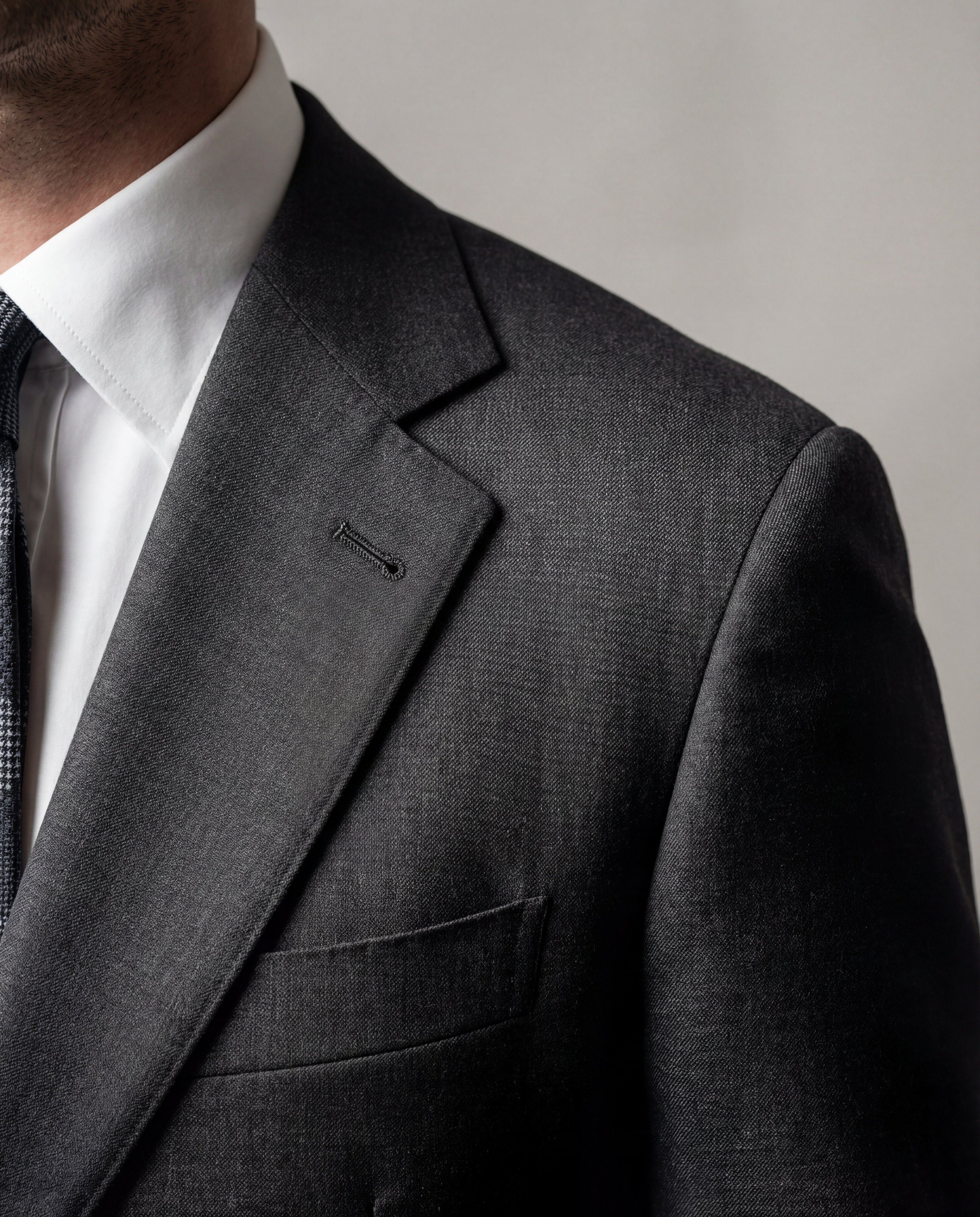
| Jacket that drapes clean | Put-together, intentional, confident |
| Wrinkled collar | Rushed, careless, low detail orientation |
| Perfect sleeve length | Precision, care, knows the rules |
A suit that fits tells a story: this person pays attention. This person is intentional. This person doesn't leave things to chance.
A suit that doesn't fit tells a different story—even if you never say a word.
Enclothed Cognition: How Clothes Change YOUR Brain
Here's what most people miss: dressing well isn't just about how others see you. It changes how you think.
Researchers call it enclothed cognition—the systematic influence that clothes have on the wearer's psychological processes.
The lab coat study (2012):
Participants wore white coats and performed attention-demanding tasks. Those told the coat belonged to a doctor made half as many errors as those told it was a painter's coat.
Same coat. Different meaning. Different performance.
The formal wear study (Slepian et al., 2015):
Subjects in formal business attire showed increased abstract thinking—a key component of creativity and strategic decision-making. They also reported higher "felt power."
You don't just look more competent when dressed well. You think more competently.
That internal shift—the feeling of being put-together—changes how you show up. Your posture straightens. Your voice steadies. You're not performing confidence. You're experiencing it.
The Confirmation Bias Problem
Once a first impression forms, something insidious happens: confirmation bias kicks in.
People unconsciously look for evidence that supports their initial judgment. They dismiss or rationalize information that contradicts it.
The Harvard finding: It takes eight subsequent positive encounters to reverse one negative first impression.
Eight.
Most professional relationships don't get eight chances. An interview. A client meeting. A networking event. You often get one shot.
This isn't fair. But pretending it doesn't exist won't help you.
The people who succeed aren't necessarily better—they're more intentional about what they communicate before the conversation starts.
What This Means for How You Dress
This isn't about vanity. It's about strategy.
Caring about appearance doesn't mean chasing compliments or seeking approval. It means understanding that you're communicating whether you intend to or not—and choosing to be intentional about what you say.
Three principles:
1. Fit matters more than price
A $600 suit that fits perfectly beats a $2,000 suit that doesn't. Shoulders that hit right, sleeves that show the correct amount of cuff, a jacket that follows your natural lines—these signal intentionality more than any designer label.
The problem? Most online suits don't fit because they're cut to generic measurements that match nobody perfectly.
2. Shoulders can't be altered
Sleeves can be shortened. Waist can be taken in. But if the shoulders don't fit from the start, the entire jacket fights your frame—and no tailor can fix it without essentially rebuilding the garment.
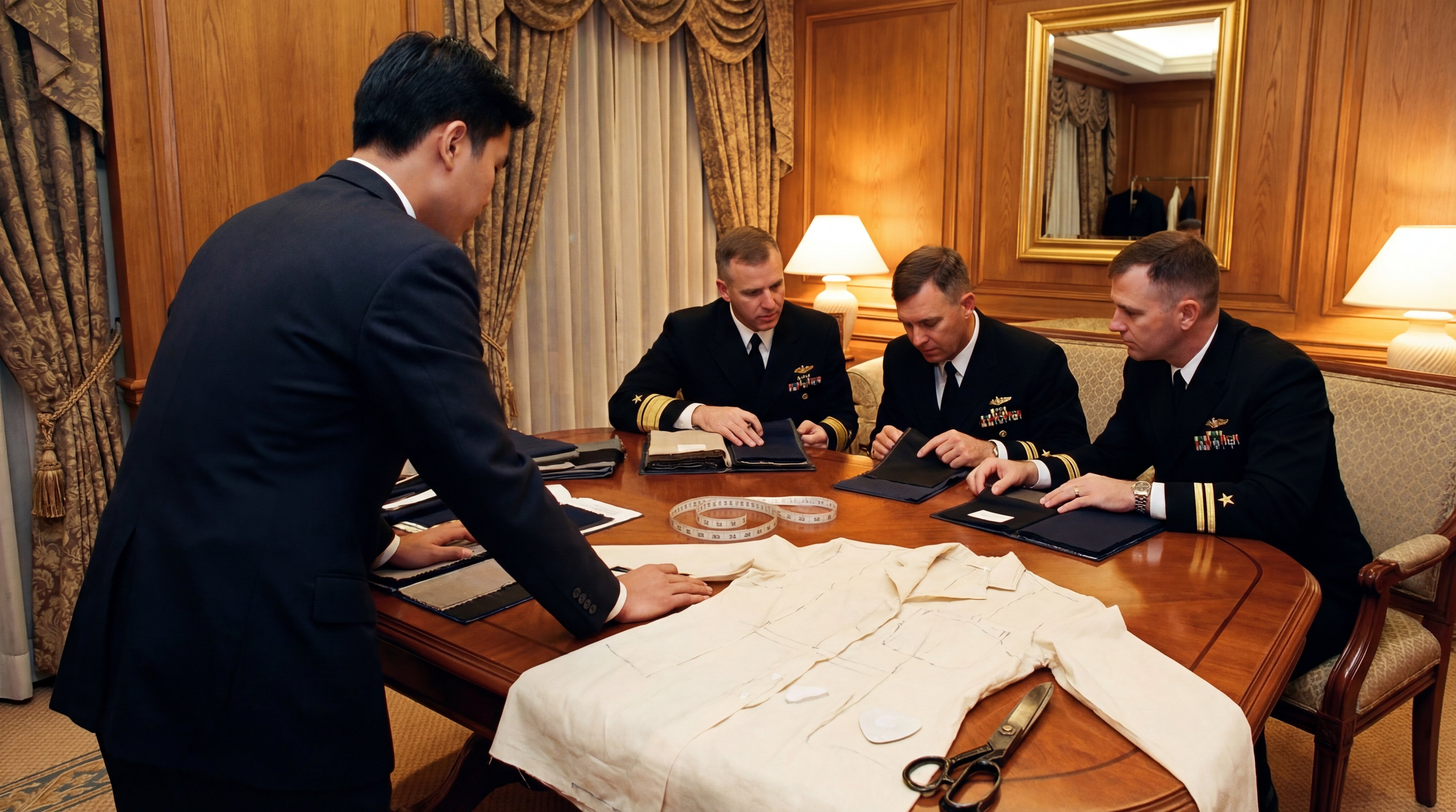
This is why draft fitting exists. A test garment catches shoulder issues before your final fabric is cut.
3. Details compound
Collar roll. Button stance. Trouser break. Individually, these seem minor. Together, they create the difference between "something's off" and "this person has it together."
People can't articulate what they're seeing. They just feel it. And that feeling becomes their assessment.
The Real Question
The science is clear: first impressions form fast, appearance drives most of the assessment, and those impressions are stubborn once formed.
You can ignore this or use it.
The men who succeed in investment banking interviews, client presentations, and high-stakes meetings aren't leaving this variable to chance. They're controlling what they can control.
Dressing intentionally isn't about impressing others. It's about showing up as the version of yourself that matches your capability.
Your appearance is making an argument before you speak.
What is it saying?
Ready to Be Intentional?
Most men leave fit to chance. We don't.
Every suit includes draft fitting—a test garment shipped to your home before we cut final fabric. You try it on. Tell us what needs adjusting. We refine the pattern. Only then do we cut your premium fabric.
Same process $3,000+ tailors use. $650 at LinenSuit.shop.
Your journey:
1. Submit measurements (DIY or send us a garment that fits)
2. Receive draft garment at home (2-3 weeks)
3. Virtual fitting consultation—we adjust the pattern
4. Final suit cut from proven fit
5. Delivered with fit guarantee
No guessing. No hoping. Just a suit that makes the right argument before you speak.