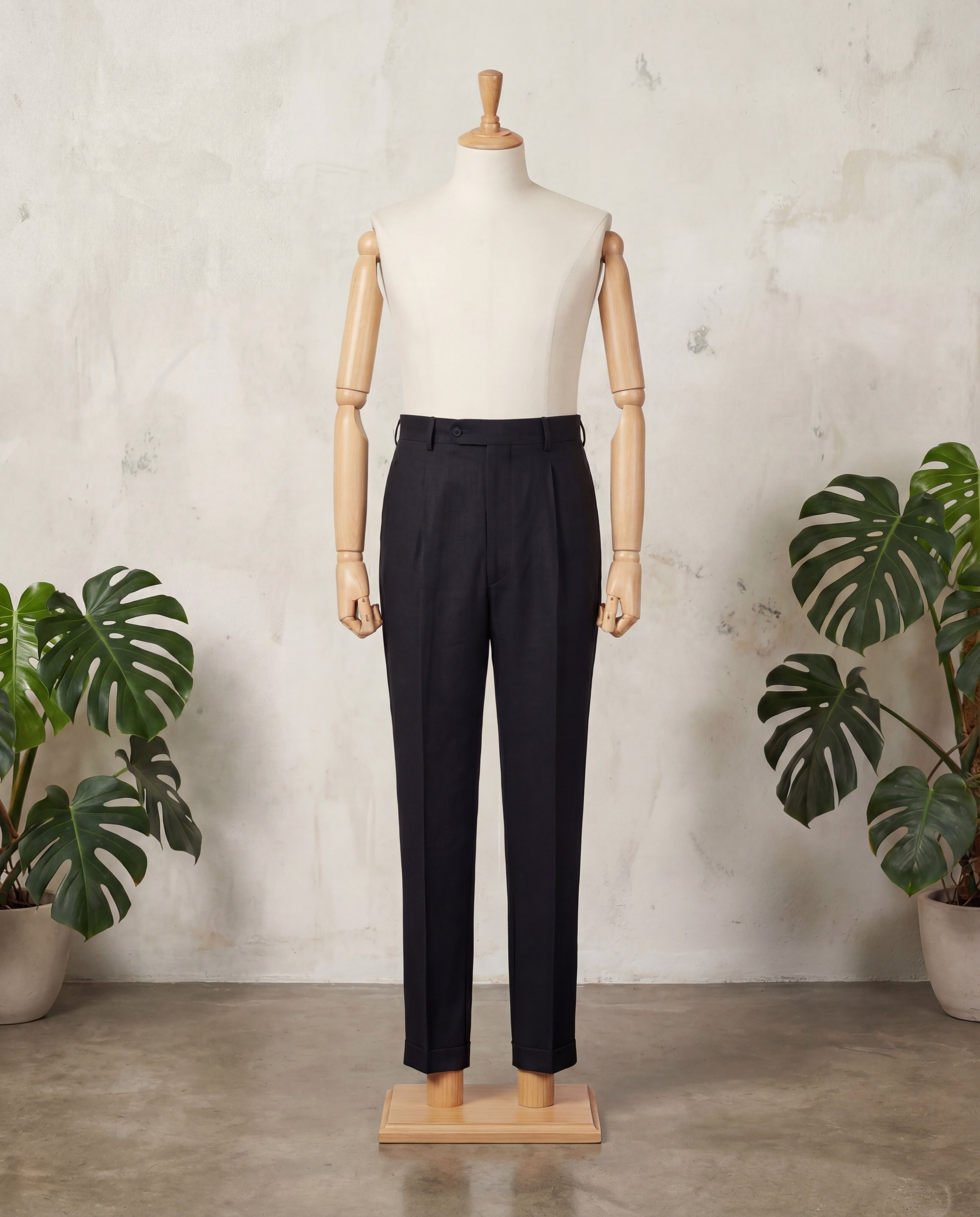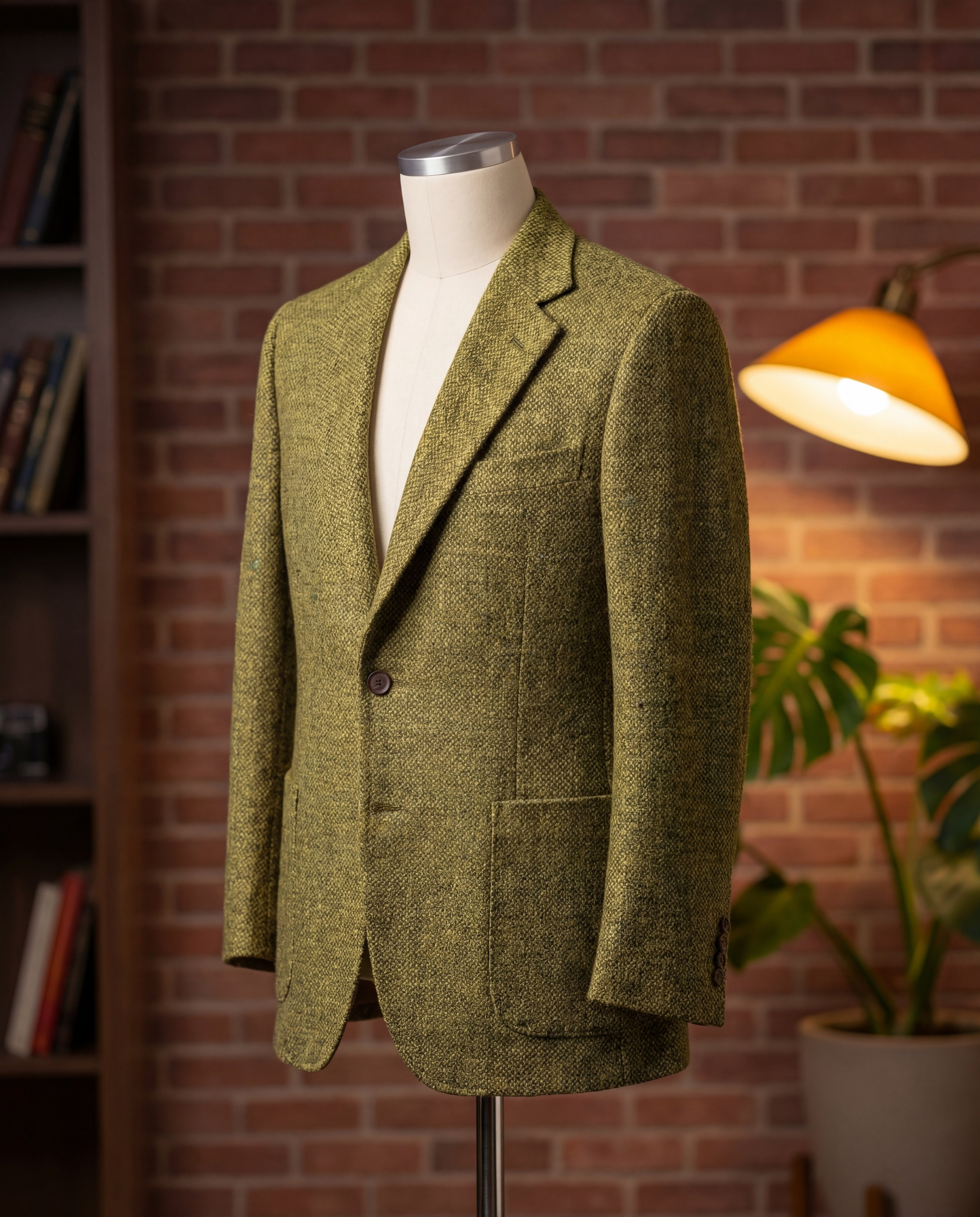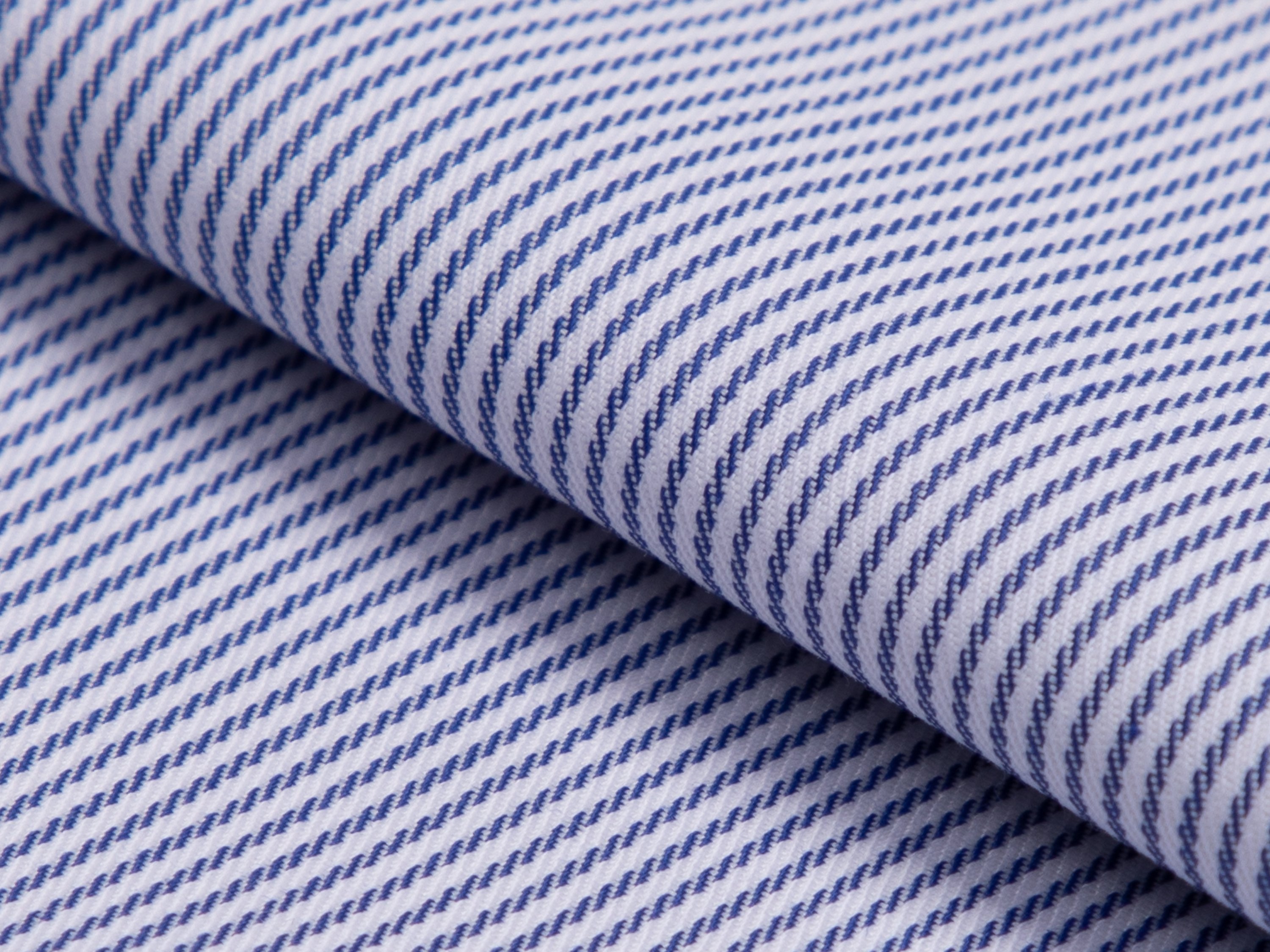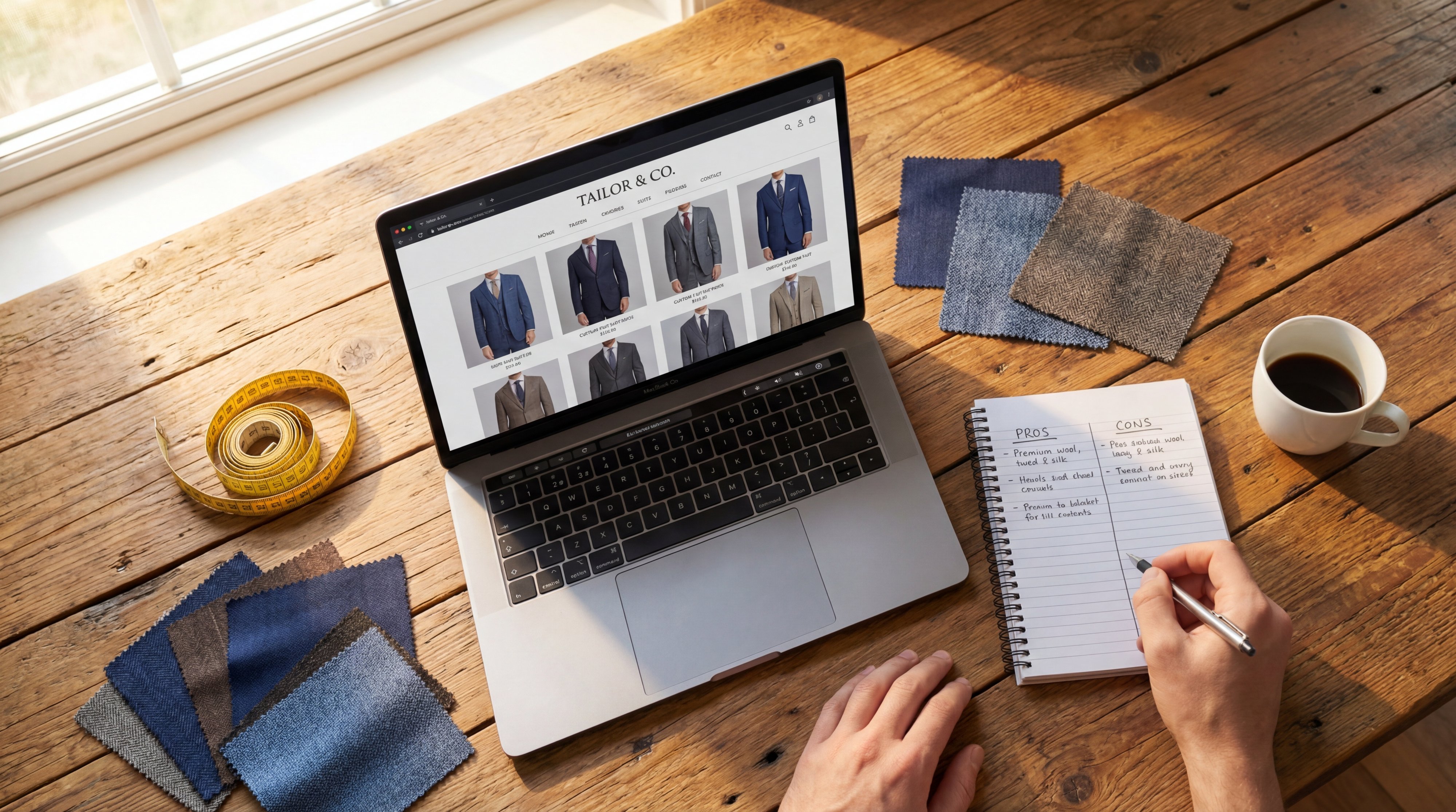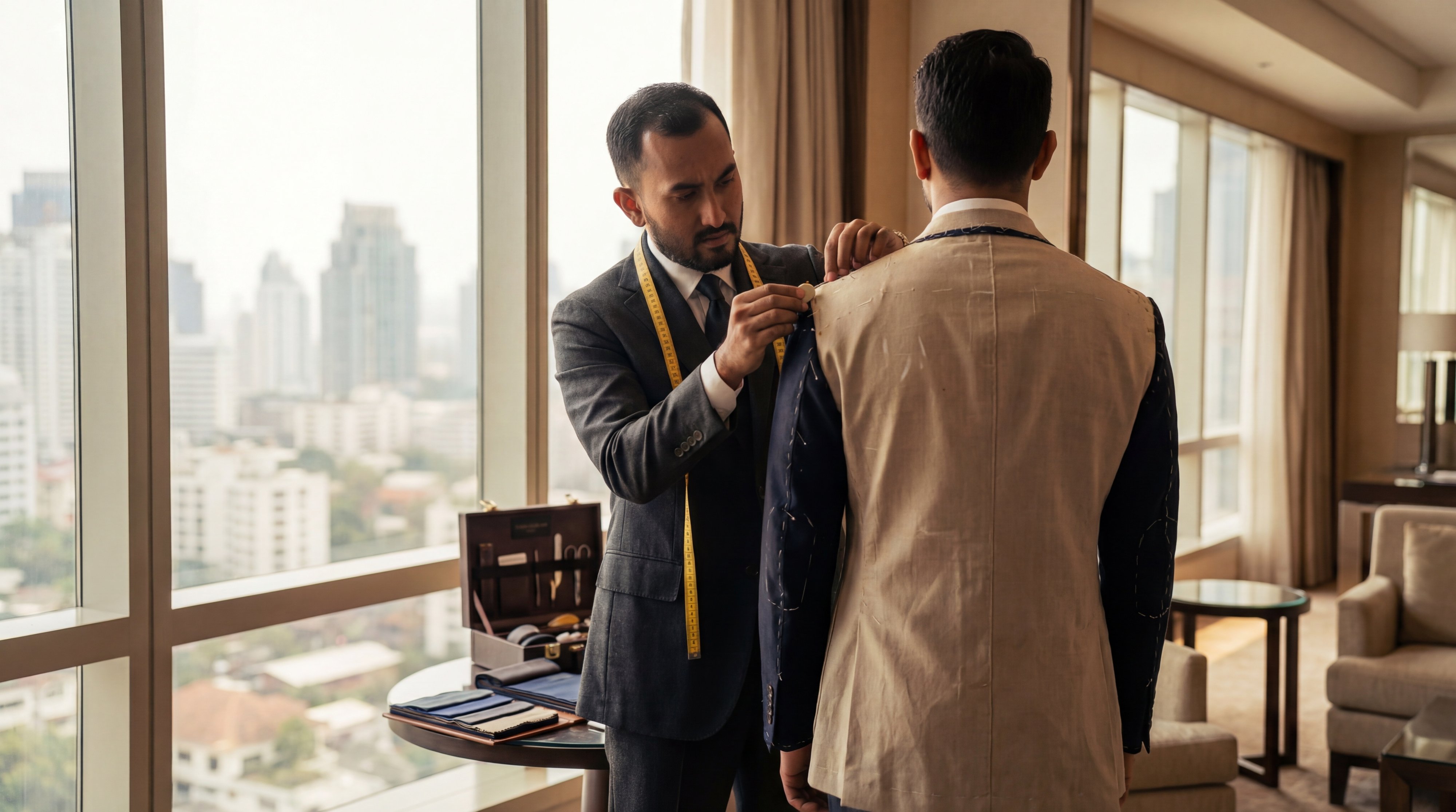
There's something special about wearing a suit that was made for you.
Not adjusted. Not altered. Not "close enough." Made—from pattern to final stitch—for your body, your preferences, your life.
Ten years ago, this meant flying to London or Hong Kong. Today, you can do it from your living room.
Online custom tailoring has opened access to craftsmanship that was once reserved for executives and celebrities. Master tailors in Bangkok, Naples, and Shanghai now serve clients worldwide. Premium fabrics from Italian mills ship to doorsteps everywhere.
This guide shows you how to navigate it—what to expect, what to look for, and how to get a suit you'll wear for years.
How Online Custom Suits Work
The process is simpler than most people expect.
Step 1: Measurements
You provide your measurements. Most companies offer two options:
Self-measurement: Follow a guide (usually video) with a measuring tape. Takes 15-20 minutes with a friend's help. Works well if you're careful.
Professional measurement: Some companies have showrooms, partner with local tailors, or accept a well-fitting garment you ship to them.
Step 2: Design Choices
You select:
- Fabric – Wool, linen, cotton, blends. Weight, pattern, color.
- Style – Single or double-breasted. Notch, peak, or shawl lapel.
- Details – Pockets, buttons, lining, vents, trouser style.
Good companies show you exactly what each choice looks like.
Step 3: Production
Your suit is cut and constructed. Timeline varies:
- Fast production: 2-3 weeks (usually made-to-measure from adjusted patterns)
- Standard: 4-6 weeks
- Premium: 6-8 weeks (often includes additional steps like test garments)
Step 4: Delivery and Fit
The suit arrives. You try it on. Most companies offer some form of adjustment policy—alterations credit, remakes, or both.
What to Look For
Not all online tailors are equal. Here's what separates the great from the average.
Fabric Transparency
Good companies tell you:
- Mill name – Where the fabric comes from (Loro Piana, VBC, Drago, etc.)
- Composition – 100% wool, wool-linen blend, etc.
- Weight – Measured in grams per square meter (gsm)
Vague descriptions like "premium Italian wool" without specifics are a yellow flag.
Construction Method
Three levels exist:
| Type | What It Means | Best For |
|---|---|---|
| Fused | Interlining glued to fabric | Budget suits, occasional wear |
| Half-canvas | Canvas in chest/lapels, fused elsewhere | Daily wear, best value |
| Full canvas | Canvas throughout, hand-shaped to your body | Investment pieces |
Most online made-to-measure is half-canvas. Full canvas is worth the upgrade for suits you'll wear frequently.
Measurement Verification
The best companies review your measurements before cutting fabric. They'll flag unusual numbers and ask clarifying questions.
If a company cuts immediately after you submit measurements with no review, that's more risk on you.
Adjustment Policy
Two main approaches:
Alteration credit: You receive $50-125 to fix issues at a local tailor. Fine for minor adjustments. Doesn't help with structural problems.
Remake guarantee: The company remakes the garment if it doesn't fit. Better protection, especially for first orders.
Read the fine print. Know which you're getting.
Test Garment Option
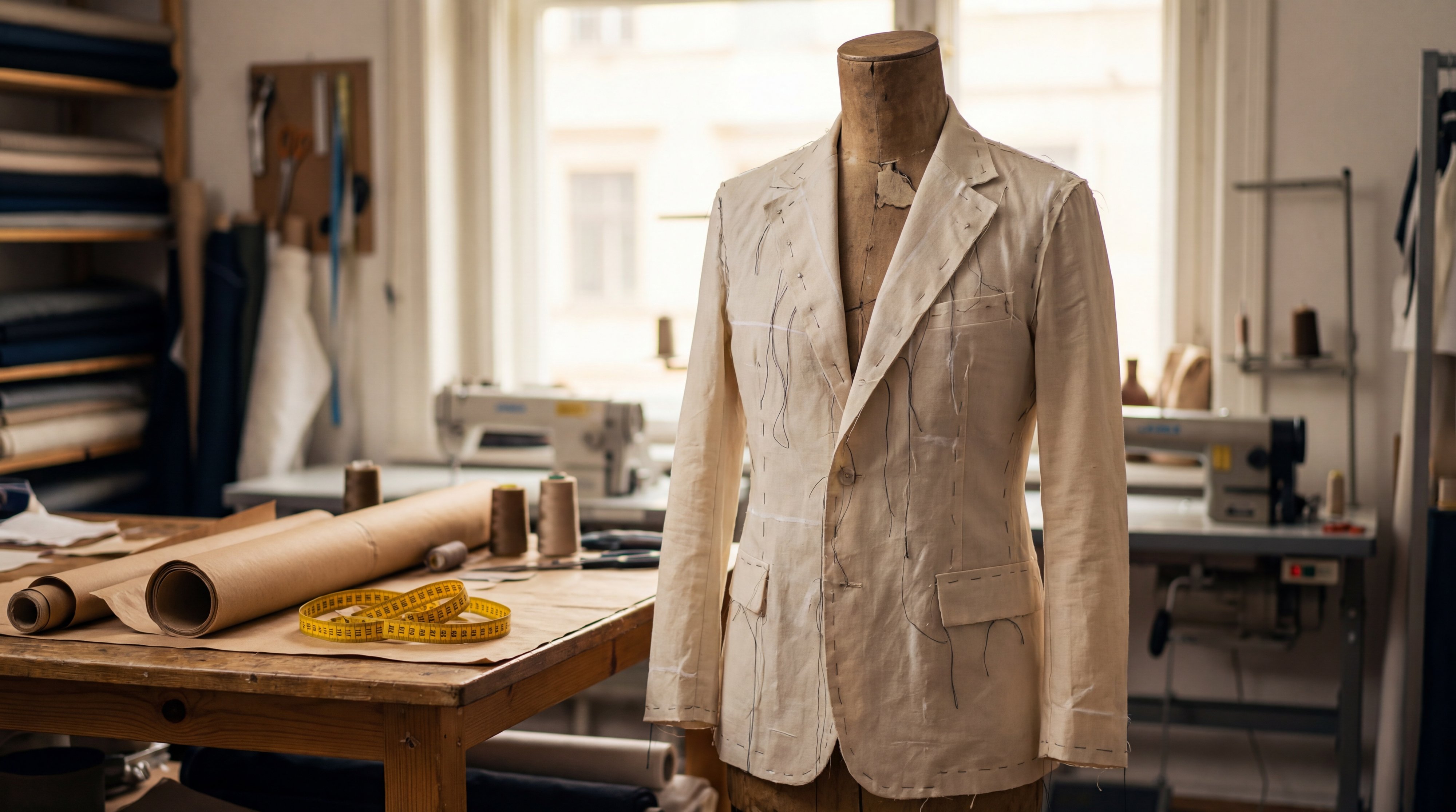
Some tailors send a test garment (called a "toile" or "muslin" or "draft") in inexpensive fabric before cutting your final suit. You try it on, give feedback, and they adjust the pattern.
This is how Savile Row has worked for 150 years. It's the most reliable way to ensure fit—especially if you've never ordered from a tailor before.
Learn more about muslin fitting →
Understanding the Price Tiers
Entry Level: $200-400
What you get: Made-to-measure from adjusted patterns. Fused or half-canvas construction. Decent wool blends. 1-2 fittings worth of adjustments.
Best for: First custom suit. Occasional wear. Testing a company before investing more.
Examples: Hockerty, iTailor, Tailor Store
Mid-Range: $400-700
What you get: Better fabrics (named mills). Half-canvas standard. More customization options. Solid adjustment policies.
Best for: Regular wear. Building a rotation. Good balance of quality and value.
Examples: Indochino, Oliver Wicks, Black Lapel
Premium: $700-1,200
What you get: Premium fabrics from top mills. Full canvas option. Detailed construction. Comprehensive fit guarantees.
Best for: Daily wear. Investment pieces. When fit matters most.
Examples: Suitsupply Custom, Proper Cloth, Alton Lane
Luxury: $1,200+
What you get: Top-tier mills (Loro Piana, Scabal). Full bespoke construction. Multiple fittings. White-glove service.
Best for: Special occasions. Clients who want the best regardless of price.
Good Online Tailors to Consider
Several companies do this well. Here are options worth exploring:
For Accessibility
Indochino – The largest online made-to-measure company. Showrooms across North America for in-person fittings. Good for first-timers who want guidance. Suits from $449.
Hockerty – Fully digital experience. Proprietary measurement system. Affordable entry point. Suits from $299.
For Quality
Suitsupply – Dutch company with excellent fabrics and modern styling. Custom suits from $648. Showrooms available.
Oliver Wicks – Strong reputation for fit and fabric quality. Suits from $499. Good customer service.
For Service
Alton Lane – Showrooms with private appointments. 2-week delivery. Suits from $695. Good for those who want hands-on guidance.
Black Lapel – Deep customization options. Strong alteration policy. Suits from $549.
Our Approach
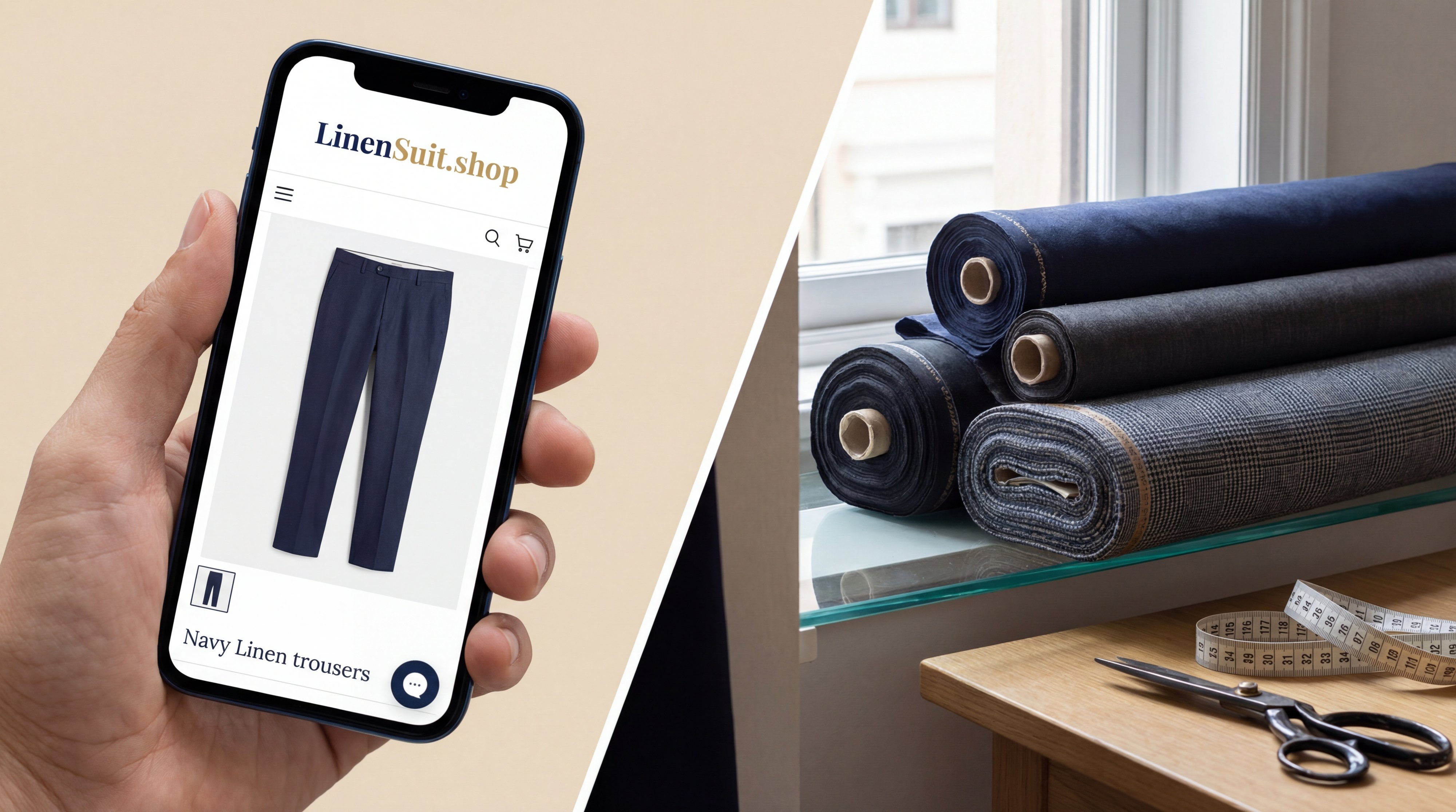
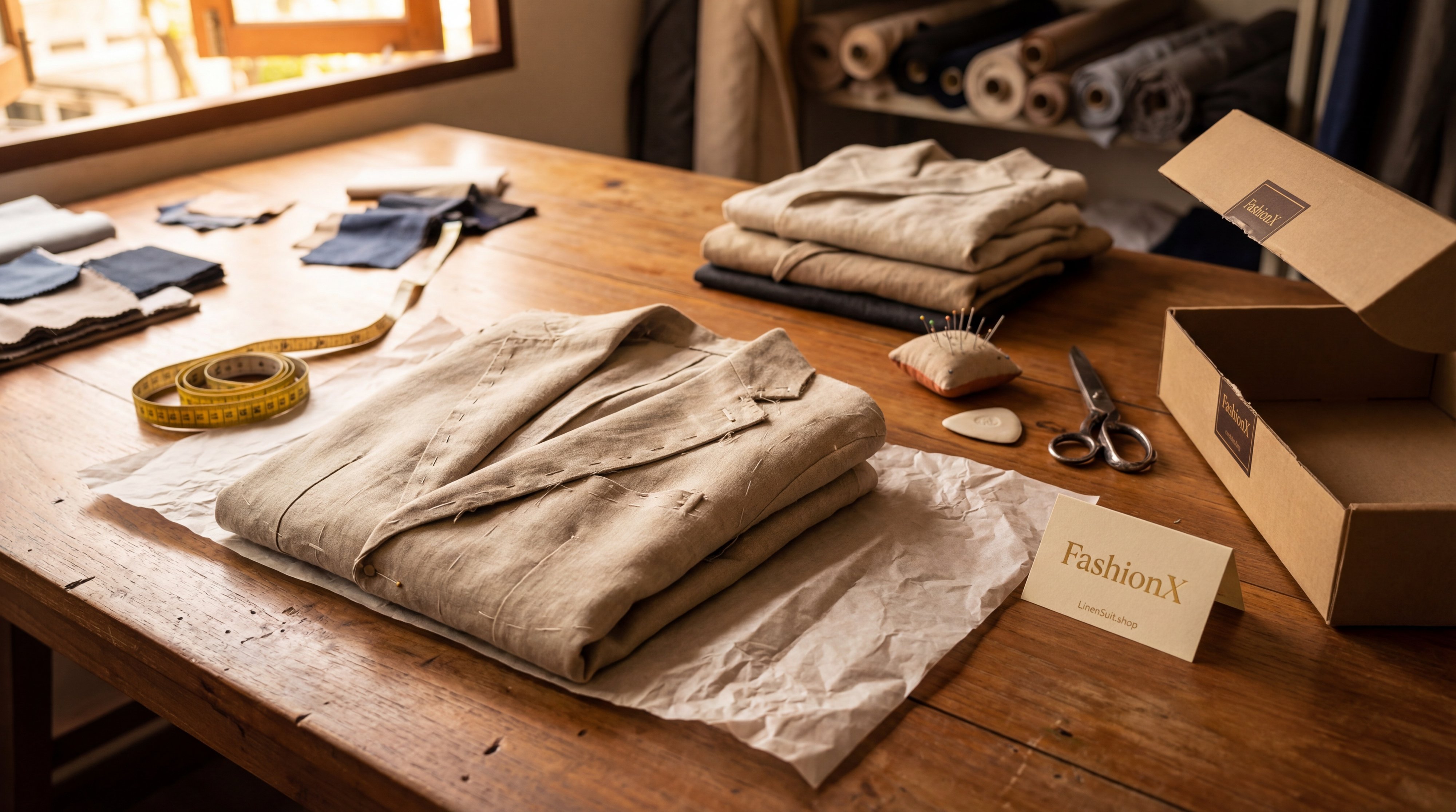
LinenSuit.shop – We include a draft fitting (test garment) with every order. You try it at home, give feedback, and we adjust the pattern before cutting your final fabric.
This catches fit issues before they become problems. It's the same process $3,000+ Savile Row tailors use—we just deliver it at $590-800.
Best for: Clients who want fit certainty. First-time online buyers. Those who've been disappointed before.
Learn about our draft fitting process →
Your First Order: What to Expect
Week 1-2: Measurement and Design
Take your time with measurements. Use video guides. Measure twice. Ask a friend to help.
Choose fabric based on when you'll wear the suit:
- Year-round: Medium-weight wool (280-320gsm)
- Summer: Lightweight wool, linen, or cotton (200-260gsm)
- Winter: Heavier wool or tweed (320-400gsm)
Week 3-4: Production
Your suit is being made. Some companies send progress updates. Most are quiet during this phase.
Week 5-6: Arrival
The suit arrives. Try it on immediately with dress shoes and a proper shirt.
Check these things:
- Shoulders should sit flat without dimpling
- Collar should hug your neck (no gaps)
- Jacket should button without pulling
- Sleeves should show 1/2" of shirt cuff
- Trousers should break cleanly at your shoe
If Something's Off
Don't panic. Adjustments are normal.
Minor issues (sleeve length, trouser hem): Local tailor can fix easily
Medium issues (waist, chest): Depends on alteration policy
Major issues (shoulders, structure): May need remake
Contact the company immediately with photos. Good companies respond quickly with solutions.
Tips for Success
Start Conservative
For your first order, choose:
- Navy or charcoal (versatile colors)
- Classic cut (not ultra-slim or fashion-forward)
- Standard details (notch lapel, two buttons)
You can get creative on future orders once you know your fit.
Invest in Measurement
If the company offers professional measurement (either in-person or by shipping a garment), consider it. The upfront cost saves potential remake hassle.
Communicate Preferences
"Slim fit" means different things to different tailors. Be specific:
- "I prefer close-fitting through the chest with room to move"
- "I like a higher button stance"
- "I want minimal break on the trousers"
Photos of suits you like help more than adjectives.
Plan Ahead
Custom suits take 4-8 weeks. If you need it for a wedding, start 3-4 months early. Leave time for adjustments.
Quick Reference Checklist
Before You Order
- [ ] Research the company (reviews from experienced buyers)
- [ ] Understand their adjustment/remake policy
- [ ] Check fabric details (mill, composition, weight)
- [ ] Confirm construction method (fused vs. canvas)
- [ ] Plan timeline (order 2-3 months before you need it)
During Measurement
- [ ] Use video guides, not just diagrams
- [ ] Have a friend help
- [ ] Measure twice, submit once
- [ ] Wear the undergarments you'll wear with the suit
When It Arrives
- [ ] Try on with proper shoes and shirt
- [ ] Check fit in natural light
- [ ] Move around—sit, raise arms, turn
- [ ] Document any issues with photos immediately
The Bottom Line
Online custom suits work. Thousands of people wear beautifully fitted garments ordered from their phones.
The key is understanding the process:
1. Choose a reputable company
2. Take measurements carefully
3. Select fabric and style you'll actually wear
4. Communicate clearly
5. Plan for timeline
Do that, and you'll own something most people never experience—a suit that fits like it knows you.
Related Reading
- Complete Guide to Muslin Fitting – Why test garments matter
- What is Draft Fitting? – Our test garment process
- Made to Measure vs Bespoke – Understanding the terminology
- Complete Fabric Guide – Choosing the right material
- Our Fit Guarantee – What happens if something's off
Questions about ordering?
Email: support@linensuit.shop
WhatsApp: Available in footer